
In today’s fast-changing world, making informed policy decisions has never been more crucial. As new challenges arise—from climate change to public health crises—policy analysts play a vital role in turning complex research into actionable strategies.
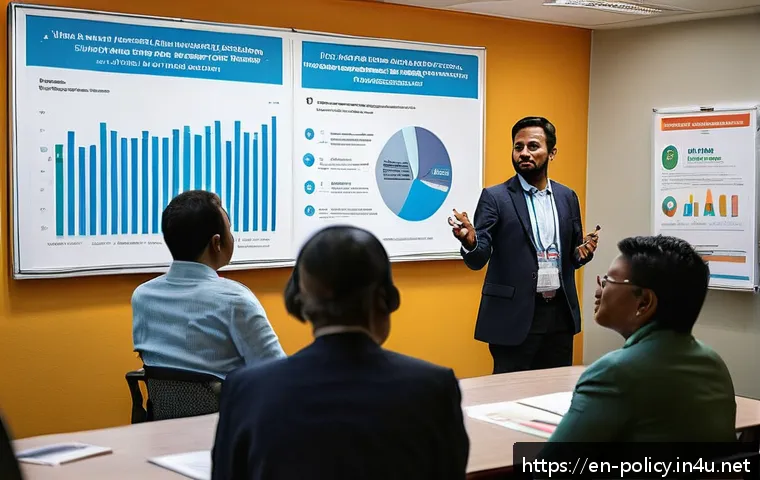
Their expertise ensures that evidence doesn’t just sit in academic journals but actively shapes real-world solutions. If you’ve ever wondered how data truly influences government actions, you’re about to uncover the powerful connection between research and policy.
Let’s dive into how these behind-the-scenes experts drive smarter, evidence-based decision making that impacts us all.
Transforming Complex Data into Practical Policy Solutions
Decoding Research for Real-World Impact
Policy analysts often face mountains of data that seem overwhelming at first glance. From dense statistical reports to intricate scientific studies, their job starts by breaking down this complexity into digestible, actionable insights.
I’ve seen firsthand how translating jargon-filled research into clear, concise summaries can make a huge difference in decision-making. When policymakers receive information in an understandable format, they’re far more likely to consider evidence seriously rather than dismissing it due to confusion or overload.
This step is crucial because even the best research is useless if it doesn’t reach the right audience in the right way.
Bridging the Gap Between Academics and Practitioners
There’s often a disconnect between academic researchers and those crafting policies on the ground. Researchers focus on theory and controlled environments, while policymakers must act swiftly in messy, real-world contexts.
Policy analysts serve as translators and mediators, ensuring that research findings are not only accurate but also applicable. For example, I recall a case where public health data was reinterpreted to fit the urgent needs of a city facing an outbreak, enabling targeted resource allocation that saved lives.
This adaptability is key because rigid adherence to research without considering local realities can backfire.
Crafting Communication Strategies That Engage Stakeholders
Beyond just simplifying data, policy analysts shape the way information is communicated to various audiences, including legislators, community groups, and the media.
The tone, framing, and channels used can significantly influence how policies are received and supported. In my experience, creating compelling narratives around data—highlighting human stories alongside statistics—helps build empathy and urgency.
This approach often leads to stronger buy-in and smoother implementation compared to dry presentations filled with numbers alone.
Leveraging Technology to Enhance Policy Analysis
Utilizing Data Analytics Tools for Deeper Insights
The evolution of technology has revolutionized how policy analysts work. Advanced data analytics platforms enable the processing of vast datasets quickly, uncovering patterns and trends that were previously hidden.
I’ve worked with tools that incorporate machine learning to predict outcomes of policy options, which adds a powerful predictive layer to decision-making.
This tech-driven approach allows for more nuanced, evidence-based recommendations that can anticipate potential pitfalls before policies are enacted.
Interactive Dashboards for Real-Time Monitoring
Interactive dashboards have become game-changers in the policy arena. They provide real-time updates on key indicators, allowing policymakers to track the impact of their decisions continuously.
From economic indicators to environmental metrics, these dashboards enable quick adjustments when unexpected challenges arise. I recall a situation where live data monitoring helped a transportation department reroute funding promptly after traffic patterns shifted due to a new urban development project, preventing costly delays.
Collaborative Platforms for Cross-Sector Engagement
Modern policy challenges require collaboration across multiple sectors, and technology facilitates this like never before. Cloud-based platforms enable stakeholders from government agencies, nonprofits, and private sectors to work together seamlessly, sharing data and insights.
My experience shows that such collaboration often leads to more holistic solutions because it integrates diverse perspectives and expertise. This interconnectedness is essential for addressing complex issues like climate change or public health emergencies.
Measuring Policy Effectiveness Through Evidence
Designing Robust Evaluation Frameworks
Evaluating whether a policy is working as intended is as important as designing it. Policy analysts develop comprehensive evaluation frameworks that define clear metrics and benchmarks.
These frameworks help in identifying successes and areas needing improvement. I’ve been involved in crafting evaluations that combine quantitative data with qualitative feedback, providing a fuller picture of policy impact.
This balanced approach ensures that numbers don’t tell the whole story and that human experiences are also considered.
Continuous Feedback Loops to Refine Policies
Effective policy analysis doesn’t stop once a policy is implemented. Analysts establish continuous feedback loops, gathering ongoing data and stakeholder input to inform adjustments.
I’ve seen how this iterative process can transform a struggling program into a success story by fine-tuning based on real-world results. This dynamic approach contrasts sharply with static policies that remain unchanged despite evidence suggesting needed reforms.
Transparent Reporting to Build Trust
Transparency in sharing evaluation results fosters public trust and accountability. Policy analysts prepare reports that are accessible and honest about both achievements and shortcomings.
In my experience, this openness encourages constructive dialogue and community support, which are vital for long-term success. Transparency also deters political manipulation by grounding discussions in facts rather than rhetoric.
Addressing Urgent Social Issues with Evidence-Based Policy
Responding to Public Health Emergencies
When crises like pandemics strike, the ability to quickly turn research into effective policies becomes a matter of life and death. Policy analysts synthesize emerging scientific data to recommend interventions such as lockdown measures, vaccination campaigns, or resource distribution.
I remember during a recent health crisis how real-time data analysis informed decisions that balanced public safety with economic considerations, highlighting the delicate trade-offs policymakers must manage.
Tackling Climate Change Through Data-Driven Strategies
Climate change demands long-term planning grounded in robust evidence. Analysts integrate climate models, economic forecasts, and social impact studies to formulate policies that promote sustainability.
I’ve worked with teams designing incentives for renewable energy adoption that are informed by both environmental science and market behavior, ensuring policies are practical and effective.
These strategies often require creative thinking to align diverse interests and create momentum for change.
Reducing Inequality with Targeted Interventions
Social inequality is a persistent challenge that evidence-based policies can address more effectively than one-size-fits-all approaches. Analysts use disaggregated data to identify vulnerable populations and tailor interventions accordingly.
For example, programs aimed at improving educational outcomes in underserved communities rely on detailed local data to allocate resources wisely. From my perspective, this targeted approach not only maximizes impact but also promotes fairness and social cohesion.

Challenges Faced by Policy Analysts in Bridging Research and Practice
Dealing with Conflicting Evidence
Not all research points in the same direction, and policy analysts often grapple with contradictory findings. Deciding which evidence to prioritize requires critical judgment and understanding of methodological quality.
I’ve encountered situations where competing studies made it tough to recommend a clear path, forcing analysts to highlight uncertainties and propose flexible options instead.
Managing Political and Institutional Constraints
Policy decisions rarely happen in a vacuum; political agendas and institutional limitations heavily influence what can be done. Analysts must navigate these realities while maintaining integrity and advocating for evidence-based solutions.
From my own experience, balancing ideal recommendations with pragmatic compromises is a delicate art that demands both diplomacy and conviction.
Communicating Complexities Without Oversimplification
Simplifying research for policymakers risks losing important nuances, yet too much detail can overwhelm. Finding the sweet spot in communication is a constant challenge.
I’ve learned that using clear visuals, relatable examples, and layered explanations helps maintain accuracy without sacrificing accessibility.
| Aspect | Role of Policy Analysts | Impact on Policy |
|---|---|---|
| Data Interpretation | Translate complex research into clear insights | Enables informed, actionable decisions |
| Technology Use | Leverage analytics tools and dashboards | Enhances predictive accuracy and monitoring |
| Evaluation | Design frameworks and feedback loops | Supports continuous policy improvement |
| Communication | Craft narratives for diverse audiences | Builds stakeholder support and trust |
| Collaboration | Facilitate cross-sector engagement | Promotes comprehensive solutions |
Building Future-Ready Policy Analysis Skills
Emphasizing Interdisciplinary Knowledge
The complexity of today’s challenges demands that policy analysts draw on multiple fields—economics, sociology, environmental science, and more. I’ve noticed that those who cultivate a broad knowledge base are better equipped to understand interconnected issues and design holistic policies.
This interdisciplinary approach fosters creativity and adaptability, which are invaluable in a rapidly changing world.
Developing Strong Communication and Negotiation Skills
Beyond technical expertise, the ability to persuade and negotiate is critical. Analysts often find themselves advocating for evidence in environments where competing interests dominate.
I’ve found that honing these soft skills enables analysts to navigate political landscapes effectively and build coalitions that support sustainable policies.
Staying Updated with Emerging Trends and Tools
The policy landscape and analytical tools are constantly evolving. Analysts committed to continuous learning stay ahead by engaging with new methodologies, data sources, and technology platforms.
In my experience, this proactive approach not only improves the quality of analysis but also enhances career growth and influence within policymaking circles.
Ethical Dimensions in Policy Analysis
Ensuring Transparency and Accountability
Policy analysts have a responsibility to maintain transparency about data sources, methodologies, and potential biases. I’ve witnessed how openness strengthens credibility and deters misuse of evidence.
Being upfront about limitations and uncertainties fosters trust among both policymakers and the public.
Balancing Objectivity with Advocacy
While analysts strive to present unbiased evidence, they often advocate for policies aligned with ethical and social values. Managing this balance requires careful reflection and professionalism.
From my standpoint, acknowledging personal and institutional values openly helps maintain integrity without compromising objectivity.
Protecting Privacy and Data Security
Handling sensitive data demands strict adherence to privacy standards. Analysts must navigate legal and ethical frameworks to protect individuals’ rights while leveraging data for public good.
I’ve encountered cases where safeguarding data trust was pivotal in sustaining stakeholder cooperation and program success.
Conclusion
Transforming complex data into practical policy solutions is both an art and a science that requires skillful interpretation, effective communication, and ongoing evaluation. By bridging the gap between research and real-world application, policy analysts play a vital role in shaping decisions that truly make a difference. Embracing technology and ethical responsibility ensures these policies remain relevant and trustworthy in a rapidly changing world.
Helpful Information
1. Clear communication of research findings increases the likelihood of evidence-based policymaking.
2. Utilizing advanced analytics and real-time dashboards enhances the accuracy and responsiveness of policy decisions.
3. Continuous feedback loops are essential for refining policies and adapting to changing circumstances.
4. Collaboration across sectors leads to more comprehensive and effective solutions.
5. Maintaining transparency and ethical standards builds trust among stakeholders and the public.
Key Takeaways
Policy analysis thrives on the ability to translate complex data into actionable insights while balancing technical rigor with practical needs. Leveraging technology and fostering interdisciplinary knowledge empower analysts to craft adaptable, evidence-based policies. Strong communication and ethical integrity remain fundamental to achieving lasting impact and public trust in policymaking.
Frequently Asked Questions (FAQ) 📖
Q: uestionsQ1: How do policy analysts use research data to influence government decisions?
A: Policy analysts take complex research findings and translate them into clear, practical recommendations that policymakers can understand and implement.
They assess the credibility of data, consider its relevance to current issues, and forecast potential outcomes. By doing so, they ensure that decisions are grounded in solid evidence rather than guesswork or political bias.
From my experience, when analysts present data through compelling narratives and real-world examples, it significantly increases the chances that policymakers will adopt those strategies.
Q: What kinds of challenges do policy analysts face when turning research into actionable policies?
A: One major challenge is dealing with incomplete or conflicting data, which can make it tough to draw clear conclusions. Additionally, policy analysts often have to balance scientific evidence with political, economic, and social considerations.
Timing is another hurdle—sometimes decisions need to be made quickly during crises, limiting the depth of analysis possible. I’ve noticed that successful analysts are those who can communicate complex findings succinctly and adapt recommendations to fit the practical realities of government processes.
Q: Why is evidence-based policymaking important for addressing issues like climate change or public health crises?
A: Evidence-based policymaking ensures that responses to critical issues are effective and efficient, minimizing wasted resources and unintended consequences.
For example, in tackling climate change, policies backed by robust scientific data can target the most impactful areas, such as reducing emissions or promoting renewable energy.
Similarly, during public health emergencies, relying on up-to-date research allows for timely interventions that save lives. From what I’ve seen, when governments ignore evidence, policies often fall short or fail altogether, underscoring the vital role of informed analysis.